
Between the early 1500s and mid-1800s, millions of African men, women and children were stripped of their human status — thrust into an existence of slavery, traded as objects, not beings, across the Americas. Known as the Middle Passage, cargo ships travelled along triangular trade routes, a journey of roughly 21-90 days, taking goods like knives, guns and other ammunition from Europe to Africa, then Africans to work as slaves in the Americas and West Indies, and finally transporting raw materials such as sugar, tobacco, indigo and rum, back to Europe. Slave captains would anchor their ships off Africa’s Guinea Coast for up to a year to collect their cargo of anywhere from 150-600 slaves (who were kidnapped and forced to walk to the coast) to make the journey to the Americas. However, due to the ship’s horrific conditions below deck (lack of food, exercise, medicines, space, etc.), it is estimated that roughly 13% of African slaves died before reaching the American shorelines. The deceased were tossed into the ocean. Following the American revolution, and despite America’s slave trade’s official end in 1833, the African continent was divided up by colonizers for its raw materials. By the late 1800s to mid-1900s, almost every region of Africa was ruled by a colonial administration — Great Britain, France, Portugal, Germany and Italy, to name a few. The effects of colonialization and the slave trade left an ever-lasting mark on the African continent and the ancestors of its people.
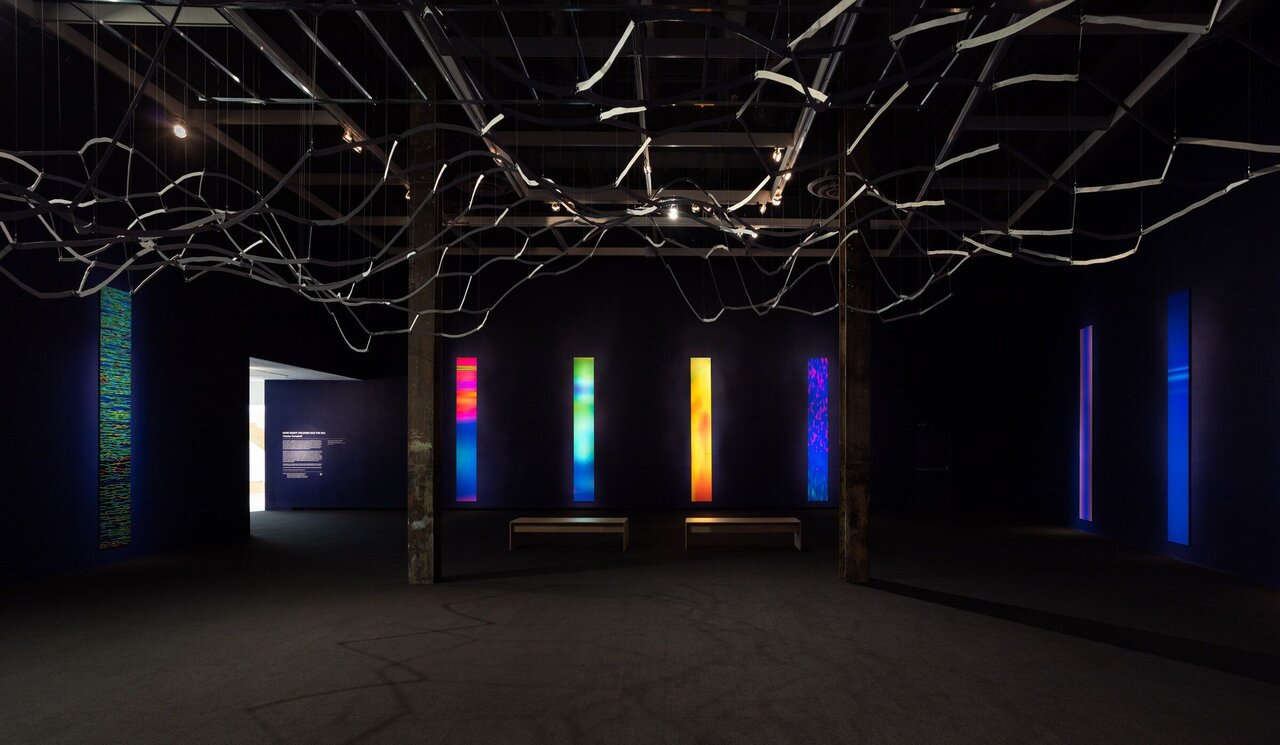
Charles Campbell, How many colours has the sea, 2024. Co-commissioned by the Toronto Biennial of Art and the National Gallery of Canada. Installation view: The Power Plant, Toronto, 2024. Photo: LF Documentation
Today, Jamaican born multidisciplinary artist, writer and curator, Charles Campbell, uses his art practice to reflect the effects of colonization and slavery through audio installations and sculptures. His latest exhibition, How many colors has the sea, currently featured at The Power Plant in Toronto, recreates the physical terrain of the tectonic plates below the Atlantic ocean, connecting the African and American continents. In conjunction, nine monolithic panels featured around the room, showcase an array of colorful sound waves — breath, represented in visual format, of members of the Black community.
Upon entering the gallery space at The Power Plant, the first thing you observe is the darkness. If not for the echoing sounds of crashing waves and the bright colorful glow of the panels in the space, it would feel eerie. The artist’s statement is first on your left, with the room opening into a cube-like space on your right. A single bench sits before you as you walk forward, only to see a spider-web-like shadow appear in front of it on the floor. This is when you look up to the ceiling and see, hovering 10 feet overhead, a metal sculpture of the tectonic plates. As you walk underneath it, you start to make out shapes of underwater mountain ranges, valleys and hills, all of which remained hidden beneath the Atlantic. It makes you feel small to stare up from underneath at such a massive structure, hanging from wire attached to the high ceilings.
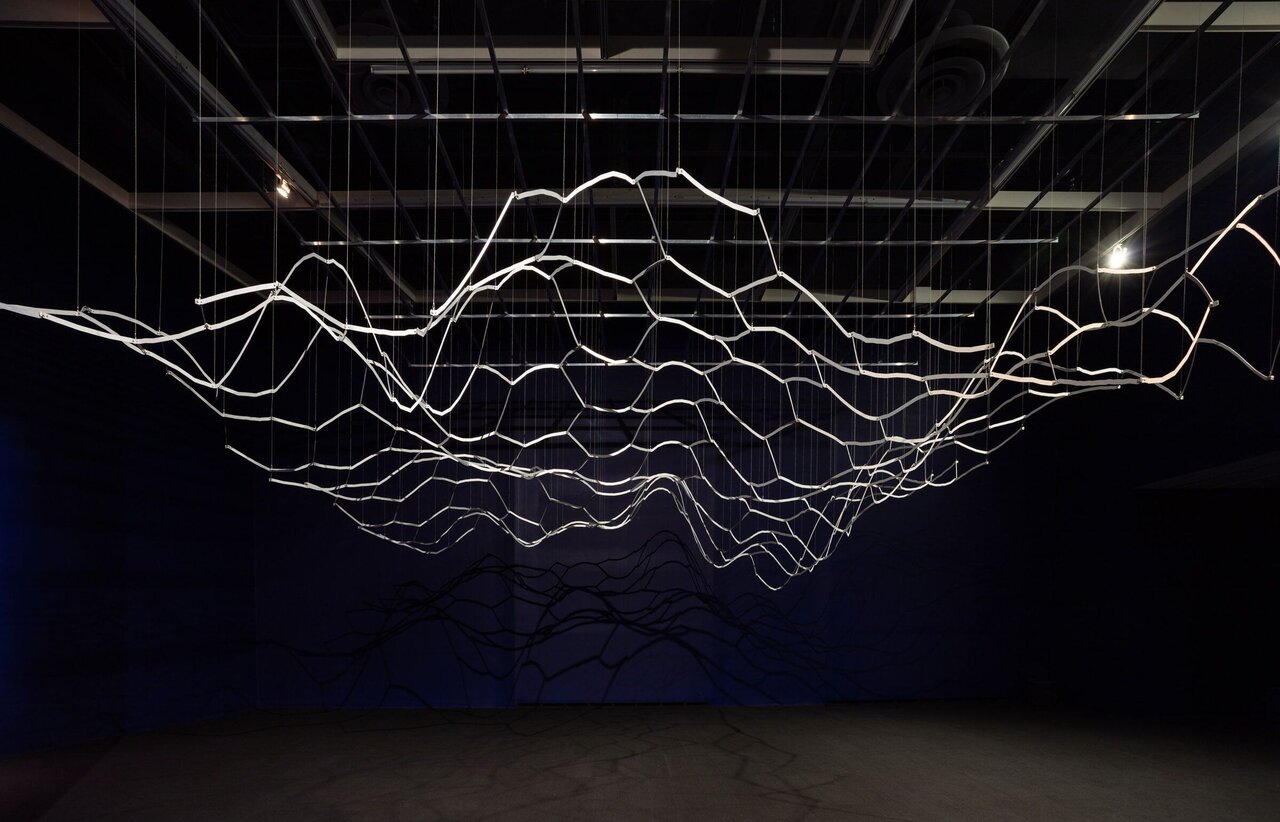
Charles Campbell, How many colours has the sea, 2024. Co-commissioned by the Toronto Biennial of Art and the National Gallery of Canada. Installation view: The Power Plant, Toronto, 2024. Photo: LF Documentation
Returning your gaze to eye level, you notice there are nine other structures in the room — each in a variety of colors and patterns, but very clearly visual sound waves. There are 4 on one wall, 4 on the opposing wall and one final one, on his own on a singular patch of wall next to the bench. There is no ignoring the magnitude of the elements throughout the space — the audio broadcast into the gallery creates a depth to both the visual breathworks and the tectonic plates that leave you feeling marveled. But what is the connection between it all?
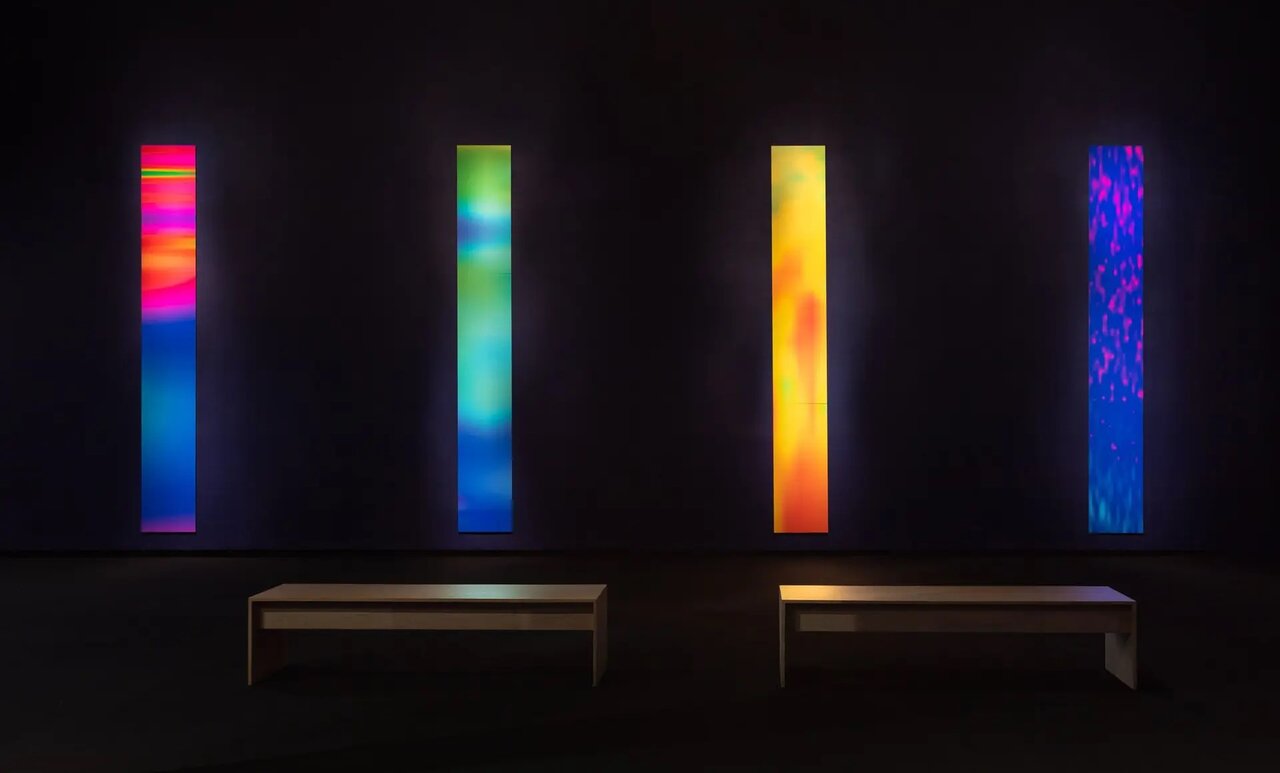
Charles Campbell, How many colours has the sea, 2024. Co-commissioned by the Toronto Biennial of Art and the National Gallery of Canada. Installation view: The Power Plant, Toronto, 2024. Photo: LF Documentation
In 2021, another of Campbell’s works, “Black Breath Spectacle,” was featured at the Vancouver Art Gallery. It was a 45-minute audio installation created using breath recordings of Black artists and local community members. Varying in length and speed for inhalations and exhalations, the recordings were accompanied by visual representation of the breaths similar to the ones used for How many colors has the sea. Campbell described the work as a response to the Black Lives Matter movement and the brutal killings of Black individuals by law enforcement in the USA, stating, “[we should] put the focus on breath rather than death.” He invited each participant in the project to imagine being next to a loved one, a childhood friend or a passed relative as their breathing was recorded — he felt it emphasized the joyousness of life itself. Looking through history, it is very clear that not all creatures are treated with the level of respect and compassion they should be. Life is often seen as something to control, oppress and subjugate. Focusing on breath, however, removes all racial, social and political associations or stigmas from an individual — because it is an action we all do, even unconsciously, that connects each of us as human beings.
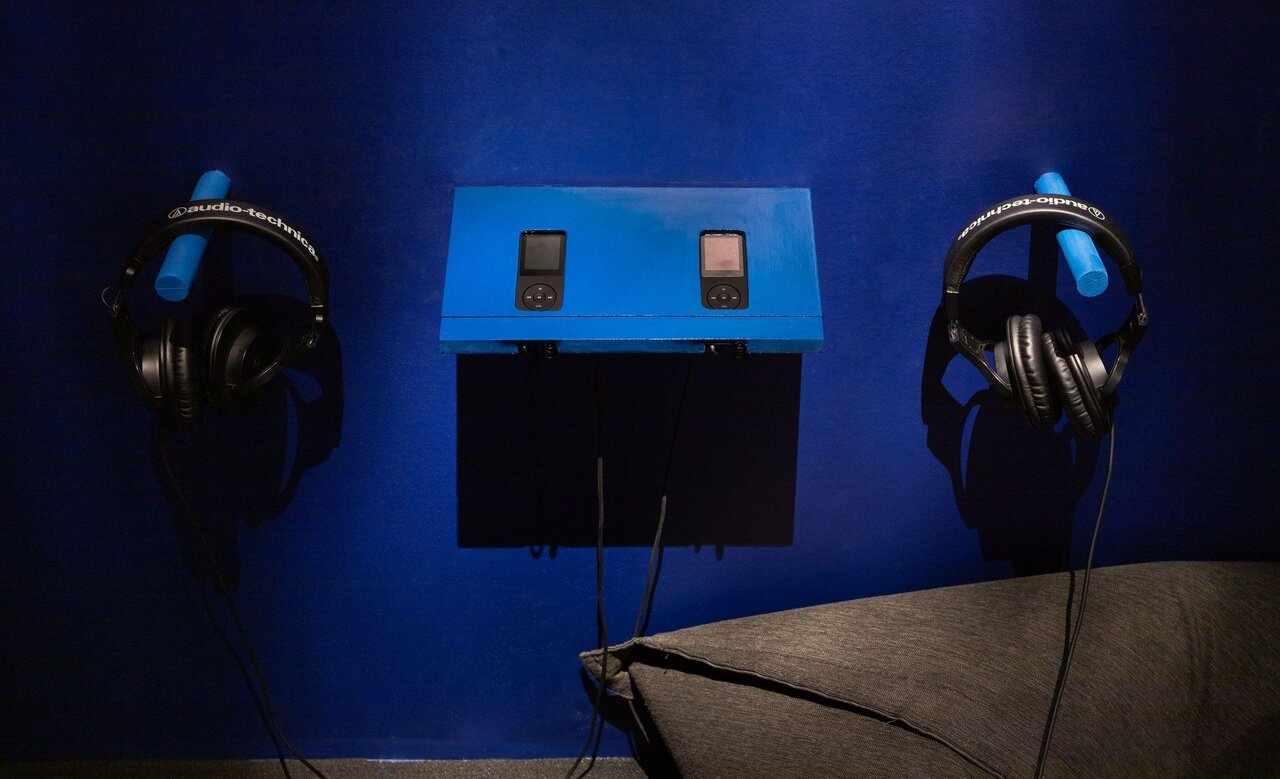
Charles Campbell, How many colours has the sea, 2024. Co-commissioned by the Toronto Biennial of Art and the National Gallery of Canada. Installation view: The Power Plant, Toronto, 2024. Photo: LF Documentation
Using the breath of Black individuals in both installations makes note of two key points — firstly, Black lives not only matter, but they continue to grow, represent and thrive in all conditions of life. Secondly, Black lives will not be controlled, they will not be oppressed, and they will not be forced into any conditions. Even an action as simple as breathing, can and will be heard by all those listening. How many colors has the sea is as depicted a sculptural and audio-visual representation of a journey through the Middle Passage, emphasizing the distance travelled by African men, women and children — knowing that with every inch closer they got to American soil, the sooner they would be sold as slaves to colonizers.
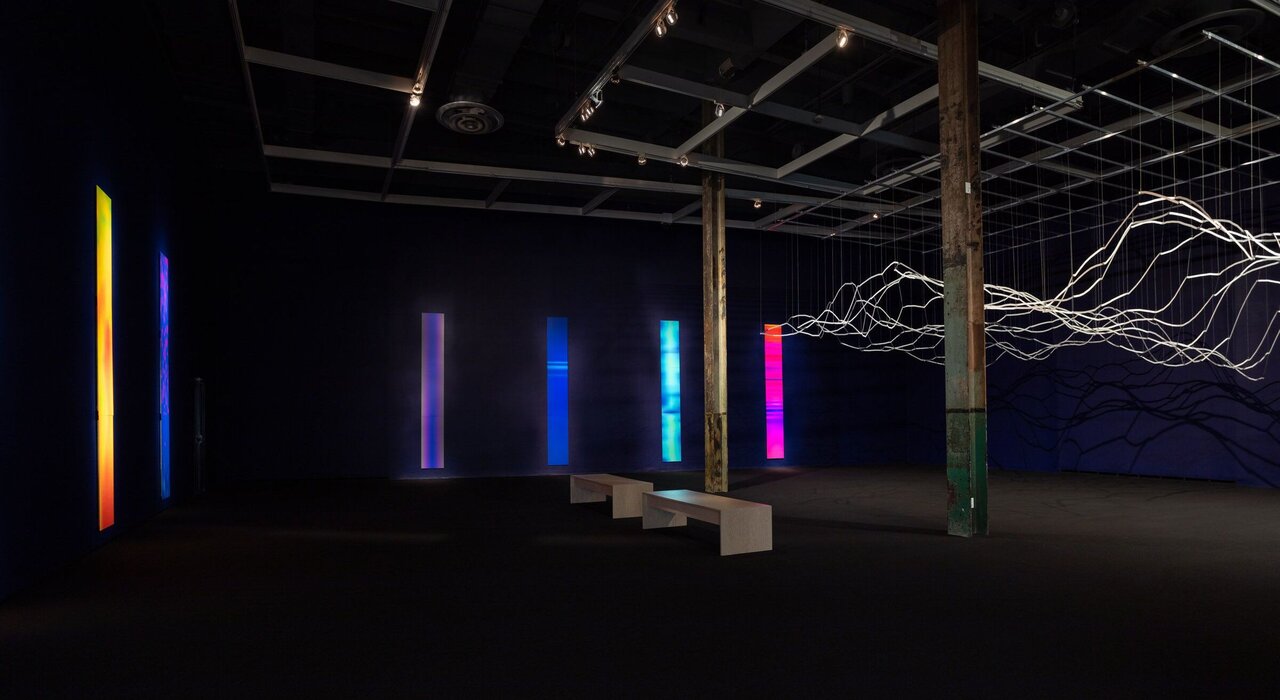
Charles Campbell, How many colours has the sea, 2024. Co-commissioned by the Toronto Biennial of Art and the National Gallery of Canada. Installation view: The Power Plant, Toronto, 2024. Photo: LF Documentation
However, it is also a representation of resilience, of life and of freedom. The visual breaths, displayed as monolithic panels, stand tall, strong, glowing in vibrant colors which cannot be ignored. So how many colors does the sea have? So long as there is breath in the human body, there will always be a colorful sea of differences between each of us — ones that make us individually unique, ones that give us power and ones that make us strong and united. In the words of Maya Angelou, “I rise…I rise…Up from a past that’s rooted in pain…I rise…I’m a black ocean, leaping and wide…Welling and swelling I bear in the tide…Bringing the gifts that my ancestors gave…I am the dream and the hope of the slave…I rise” (Still I Rise).
Lex Barrie
*Exhibition information: Charles Campbell, How many colors has the sea, September 21, 2024 – March 2, 2025, The Power Plant, 231 Queens Quay West, Toronto. Gallery hours: Wed – Sun 11 am – 6 pm, Thu 11 am – 8 pm.
Wonderful article about a very important exhibition!